


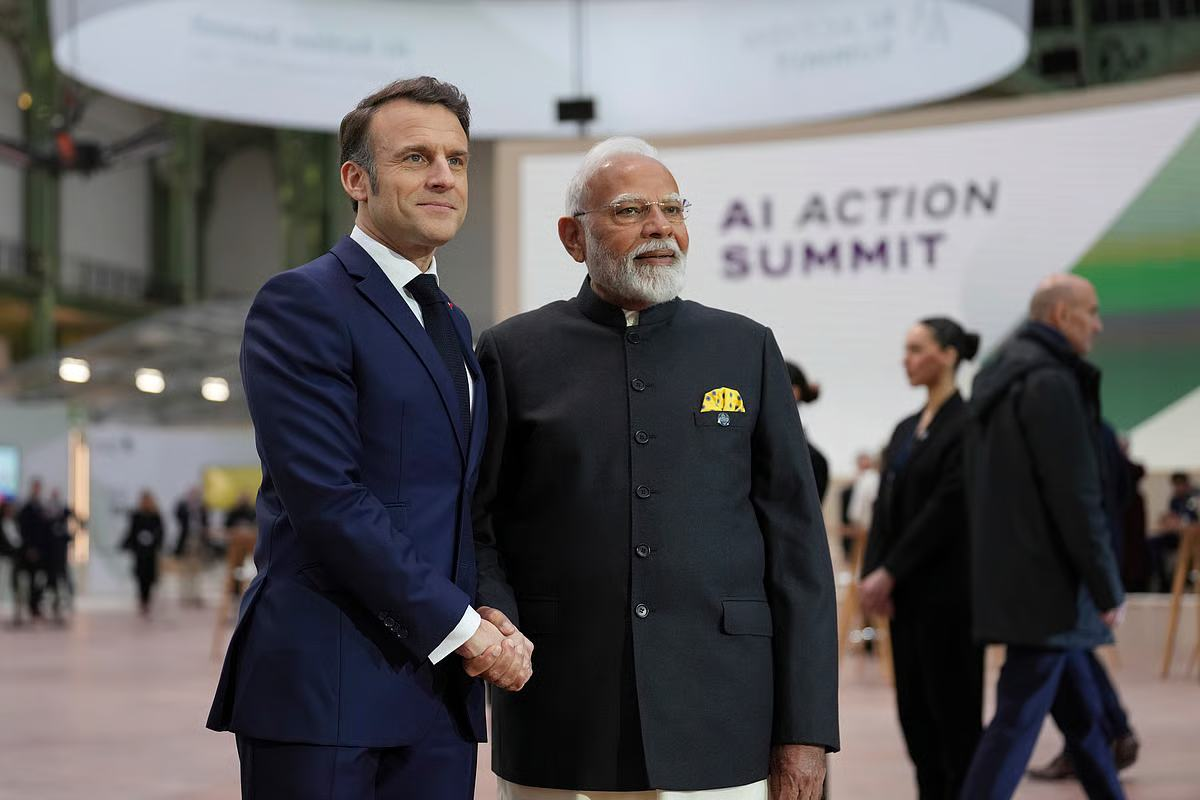
The AI Action Summit on February 10–11, 2025, in Paris, was hosted by France, and cochaired by India. The summit was attended by Honorable Prime Minister of India Mr. Narendra Modi and Honorable President of France Mr. Emmanuel Macron.
The Office of the Principal Scientific Adviser (PSA) to the Government of India in partnership with Indian Institute of Science (IISc), Bengaluru, IndiaAI Mission (MeitY) and Sciences Po University Paris organised an official side-event to the AI Action Summit 2025, titled ‘2nd India-France AI Policy Roundtable’ on February 10, 2025 at 1 place Saint Thomas d'Aquin, room K.011, Sciences Po University Campus in Paris from 5:00pm to 6:30pm (CET). The opening remarks were delivered by Prof. Ajay K. Sood, Principal Scientific Adviser to the Government of India. The roundtable was co-chaired by H.E. Mr. Henri Verdier, Ambassador for Digital Affairs, French Ministry for Europe and Foreign Affairs, and Shri Amit A. Shukla, Joint Secretary, Cyber Diplomacy Division, Ministry of External Affairs of the Government of India. This track 1.5 dialogue, held as an official side event to the AI Action Summit in Paris built on the discussions from the 1st Roundtable held on January 25, 2025, at the Indian Institute of Science (IISc) in Bengaluru, during Technology Dialogue 2025.
The inaugural closed-door roundtable titled ‘India-France AI Policy Roundtable: Roadmap for the AI Action Summit 2025’ focused on deliberating on key policy positions regarding global AI development and explored opportunities for synergy between India and France. Shri Abhishek Singh, Additional Secretary at the Ministry of Electronics and Information Technology (MeitY), and Chief Executive Officer of the IndiaAI Mission, and H.E. Mr. Marc Lamy, Consul General of France in Bengaluru were co-chairs for this roundtable. H.E. Mr. Arthur Barichard, Deputy Ambassador for Digital Affairs at the French Ministry of Europe and Foreign Affairs, participated as a speaker. The concept notes of both the roundtables are attached in the Annexure.
The following key points emerged from the discussions during these roundtables:
-
- Global AI Governance: The discussion highlighted the growing need for adaptive governance mechanisms to ensure that AI development aligns with societal values and evolving global regulatory frameworks. Participants deliberated on the role of initiatives like the AI Action Summit as important steps toward building international consensus. However, there was also an acknowledgment that achieving truly inclusive frameworks remains a complex challenge requiring sustained multilateral engagement. A key focus was on ensuring AI’s benefits are distributed equitably, with particular attention to the needs of low-income nations in the Global South. India’s active role during its G20 Presidency and its contributions to the Global Partnership on Artificial Intelligence (GPAI) were cited as examples of leadership in AI diplomacy. Participants emphasized that strengthening international cooperation will be critical in shaping a future where AI serves diverse global interests. India’s commitment to responsible AI governance—including equitable benefit-sharing, the adoption of a techno-legal framework, and the facilitation of interoperable data flows—was a central theme. The recently released sub-committee report, led by the Principal Scientific Adviser, was recognized as a significant contribution to ongoing AI governance discussions.
- Techno-Legal Framework for AI Regulation: Recognizing the evolving regulatory landscape, the need for a techno-legal framework was emphasized to balance innovation with compliance, ensuring AI’s ethical deployment across sectors. Aligning regulatory measures with innovation-driven approaches is essential for leveraging AI to drive sustainable and inclusive growth. Translating innovation into tangible impact requires a strong focus on data interoperability, enabling seamless integration, accessibility, and collaboration across AI-driven ecosystems. Participants also acknowledged that the absence of structured mechanisms for arbitration in cross-border data flows remains a challenge. In this context, techno-legal solutions were recognized as critical to safeguarding national data interests while facilitating smooth and cooperative international AI collaboration.
- DPI for AI: Speakers advocated for AI as a DPI, drawing parallels to India’s progress in Digital Public Infrastructure (Aadhaar, UPI, DigiLocker) alongside France’s robust data protection framework to develop secure and personalized AI-driven services in healthcare, education, and public administration. France and India share similar views on DPI.
- Sovereignty in Data and Models: The conversation also touched upon the increasing momentum toward the development of sovereign AI models, prompting reflections on the broader implications for global AI governance. While some saw this as a natural progression toward greater strategic autonomy, others underscored the importance of ensuring that such efforts do not lead to fragmentation or barriers to collaboration. Some participants framed data residency policies as a means of enhancing national security and economic resilience. The need for balanced and interoperable approaches was widely acknowledged, with an emphasis on fostering mutually beneficial cooperation.
- Sustainable AI: Participants underscored the critical link between digital transformation and environmental sustainability, emphasizing the need to leverage AI for cleaner and more affordable energy sources. An ESG-driven model for sustainable AI was proposed, advocating for energy-efficient AI models and the ethical use of compute resources. The Coalition for Sustainable AI is a global initiative that was launched during the AI Action Summit in Paris in February 2025. Spearheaded by France, in collaboration with the United Nations Environment Programme (UNEP) and the International Telecommunication Union (ITU), the coalition brings together a diverse group of stakeholders. India joined the Coalition, underscoring its commitment to aligning artificial intelligence development with environmental and sustainable development goals. Additionally, India was among the 60 countries that endorsed the Summit’s declaration on "inclusive and sustainable" AI.
- Inclusive AI: The importance of openness in AI policy-making was emphasized, highlighting the need for transparent and inclusive frameworks. India reaffirmed its commitment to aligning with international AI governance principles, including ethics by design and the establishment of common standards and definitions. The significance of Diversity, Equity, Inclusion, and Accessibility (DEIA) in AI discussions was highlighted, particularly regarding policies for the inclusivity of women and marginalized groups. Ensuring trust in AI remains a key priority, with initiatives such as the proposed AI Safety Institute and ongoing collaborations with UNESCO to promote responsible AI adoption.
- AI Workforce and Upskilling: Discussions highlighted the crucial role of human labor in AI data annotation, particularly in countries like India, and emphasized the importance of investing in workforce upskilling to ensure inclusive growth in the AI ecosystem. Participants also underscored the need to strengthen integrity in AIgenerated information and explored AI governance within the broader framework of shared democratic values between India and France. Under the Digital India initiative, several programs—including the establishment of Centers of Excellence in AI and specialized AI skill development initiatives—are actively contributing to the creation of a future-ready workforce. There was broad recognition of the importance of enhancing scientific expertise and improving data quality to support responsible AI development. Additionally, participants discussed the growing need for AI professionals to have a strong foundation in laws and policies governing AI, ensuring ethical and responsible deployment.
- Priority Sectors of Energy and Health: The energy and health sectors are a critical area where AI can drive transformative change, while leveraging the complementary skills of India and France. France-India collaboration in AI cloud research, dataset sharing, and cross-border startup support was also highlighted. Furthermore, the broader spectrum of Indo-French collaboration, including solar technology, was elaborated upon. The discussions underscored the importance of a sector-specific approach to AI, emphasizing its role in social impact, governance enhancement, and the development of standardized frameworks to ensure its ethical and effective deployment.
- Year of Innovation 2026: Both nations have designated 2026 as the "Year of Innovation" and jointly launched the logo at the Summit. Speakers stressed upon the potential for India and France to synergize on various policy positions and technological initiatives, fostering benefits not only at the bilateral level but also on a global scale by leveraging complementary knowledge and skill sets.
- AI Foundation: India's participation in projects like the AI Foundation was welcomed. The project of the AI Foundation is to facilitate collaboration between private sector actors, enabling the development of diverse use cases that extend far beyond the traditional AI powerhouses of the United States and China.
- AI Summit: Speakers highlighted India’s contributions to the summit’s themes, emphasizing the establishment of dedicated working groups to facilitate focused deliberations on key thematic areas of the Summit. These efforts underscore India’s commitment to fostering collaborative dialogue and advancing shared priorities within the summit’s framework. During the Summit, several significant announcements were made by India, France, and their collaborative efforts. Hon’ble Prime Minister Narendra Modi announced that India will host the next AI Summit. Outcomes for India and France from the Summit included India-France Declaration on Artificial Intelligence and a Letter of Intent between Department of Science and Technology (DST), Government of India and Institut National de Recherche en Informatique et en Automatique (INRIA) France to establish the Indo-French Center for the Digital Sciences. An agreement was reached to host 10 Indian startups at France's renowned startup incubator, Station F, providing them with opportunities to scale and access European markets.
- Public-Private Partnerships for AI Adoption: A key aspect is the importance of public-private partnerships in accelerating AI adoption, and collaborative efforts to develop real-world use cases that demonstrate AI protocols through proof-of-concept models.
- AI for Social Good: Participants highlighted the significant potential of AI in advancing social good, referencing India’s initiatives such as its efforts to support women in rural areas and the Bhashini project, which enhances language accessibility through AI-driven technology. Participants also explored the critical role of AI technology in delivering last-mile benefits, reinforcing its capacity to bridge accessibility gaps and drive inclusive growth. India’s alignment with global AI governance principles was recognized, along with its commitment to promoting Public Interest AI—an initiative that engages startups, academia, and innovators in the development of AI solutions for socio-economic progress.
- Foundational Models: The roundtable underscored the significance of federated AI computing infrastructure to support the development and deployment of foundational models. Upcoming efforts include development of domain-specific AI models for critical sectors. Such initiatives are often in collaboration with institutes like IITs and industry players. France follows a similar public-private innovation model for AI. The French government collaborates with leading universities and industry players to develop foundational AI models.
- Indigenous LLMs: The dialogue highlighted the need for multilingual Large Language Models (LLMs) that cater to the diverse languages spoken in India and France, promoting inclusivity and accessibility in AI applications. A vibrant domestic ecosystem is working on Indian LLMs. These models are trained on vast Indianlanguage datasets and enable capabilities such as understanding dialects and cultural context. India’s Bhashini project (National Language Translation Mission) is one such flagship effort.
- Interoperability: India’s and France’s initiatives could align to create an interoperable AI ecosystem. Discussions emphasized the importance of data interoperability, which is key to enabling seamless integration, accessibility, and collaboration across AIdriven ecosystems. Given India’s demonstrated leadership in building interoperable and scalable digital ecosystems, the next step is to further position AI as a public good, benefiting both India and the global community.
- Democratizing Access to AI Infrastructure: India is actively developing shared platforms to democratize access to AI tools, data, and compute resources. One such initiative is AIRAWAT that integrates HPC clusters, cloud storage, and AI frameworks, enabling academia, startups, and small enterprises to experiment, prototype, and scale AI solutions with greater ease. These efforts lower barriers to AI adoption across the economy and promote inclusive innovation. The IndiaAI Mission, structured around seven strategic pillars, provides a comprehensive framework to strengthen AI infrastructure.
- Research Collaboration: Strengthening academic collaboration between the two countries presents a significant opportunity to advance AI research and innovation. Participants highlighted the importance of continued investment in research to further explore and expand AI’s capabilities across diverse domains. A multidisciplinary approach was recognized as essential for fostering responsible AI development and deepening the understanding of AI’s broader societal effects. Discussions also emphasized the need to outline clear short- and medium-term goals, while ensuring that long-term priorities remain in focus. The role of a global network of AI research institutes to tackle major challenges was discussed.
Organised and Curated by:
Animesh Jain, Senior Policy Fellow (Adjunct), Office of Principal Scientific Adviser to the Government of India; Technology Policy Specialist, Indian Institute of Science, Bengaluru janimesh[at]iisc[dot]ac[dot]in
Shefali Mehra, Policy Analyst, Indian Institute of Science, Bengaluru shefalimehra[at]iisc[dot]ac[dot]in
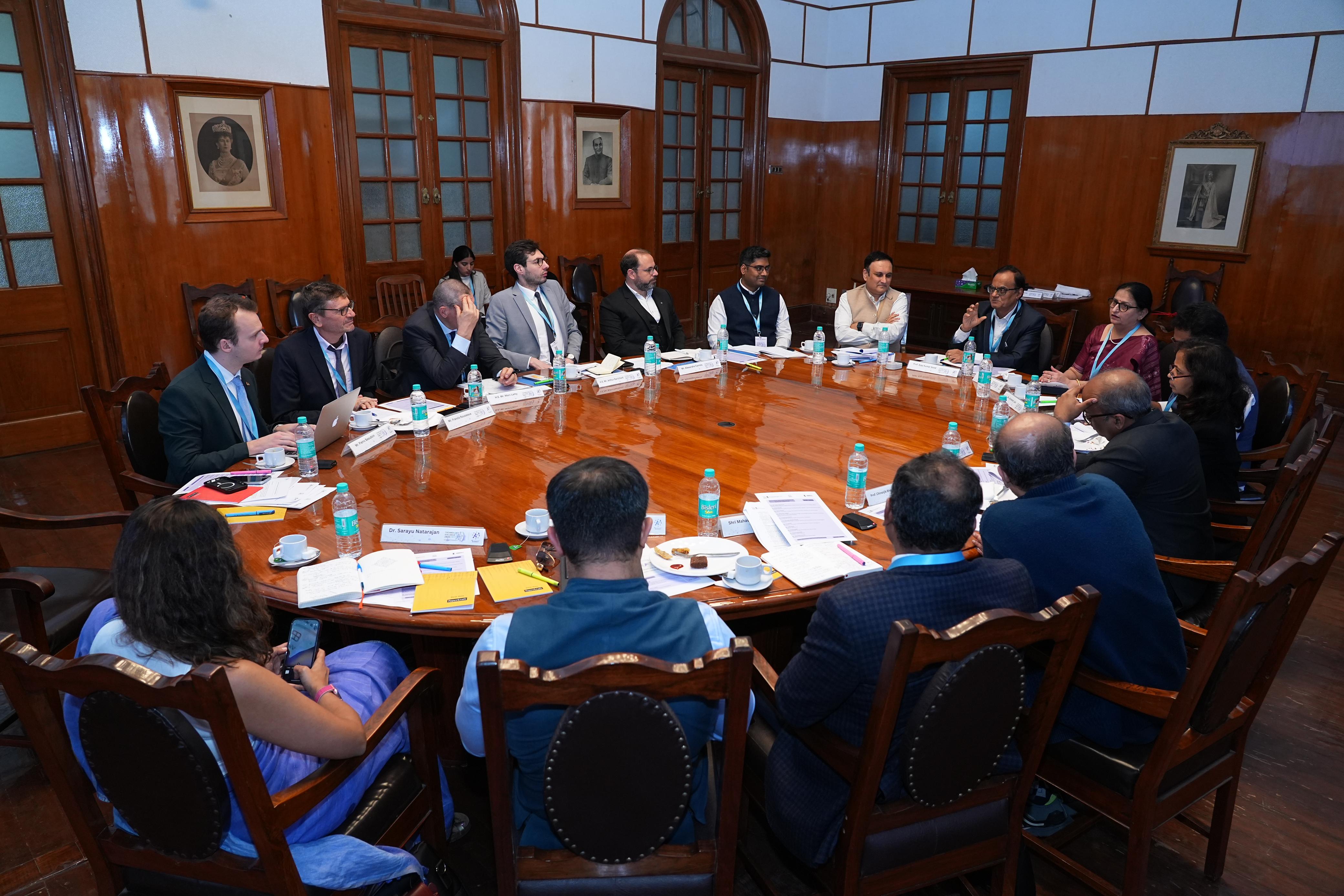
(First) India-France AI Policy Roundtable: Roadmap for the AI Action Summit 2025
25 Jan 2025 | Bengaluru, India
Artificial Intelligence (AI) is transforming economies, societies, and politics at an unprecedented pace. However, the rapid advancements in AI pose significant challenges to existing regulatory and ethical frameworks, creating gaps that could potentially hinder innovation. As the global AI landscape continues to evolve, it is imperative for policymakers to implement timely and decisive actions to fully harness the strengths of AI and maintain a competitive edge in this transformative era.
India is actively engaging in key global initiatives to underscore the importance of collective action and shared responsibility in shaping the future of AI. Notable efforts include hosting the Global Partnership on Artificial Intelligence (GPAI) ministerial meeting and focusing on equitable AI development during its G20 presidency in 2023. India also played a pivotal role in drafting and adopting UNESCO's recommendation on the Ethics of Artificial Intelligence in 2021. Furthermore, India utilizes multilateral platforms like ASEAN, G42, and the Internet Governance Forum to influence AI's future. One such pivotal collaboration is the upcoming AI Action Summit 2025 in France, which aims to ensure AI drives beneficial social, economic, and environmental outcomes. These initiatives are crucial for advancing safe, secure, and trustworthy AI through global partnerships.
India and France have built a strong partnership founded on shared democratic principles and a mutual dedication to leveraging science and technology for sustainable development. This partnership is further highlighted through recent high-profile summits, agreements, joint statements, and projects. The India-France Joint Statement, by the Hon’ble Prime Minister of India and the Hon’ble President of France, emphasizes the potential for strengthened cooperation and innovation, marking 25 years of the India-France Strategic Partnership. Notably, the declaration of 2026 as the India-France Year of Innovation reflects the mutual commitment to advancing sustainable technological solutions, including in areas like AI.
Objectives of the India-France AI Policy Roundtable:
The India-France AI Policy Roundtable, during Technology Dialogue 2025, will serve as a platform for discussions leading up to the 2025 AI Action Summit. It aims to deliberate on key policy positions regarding global AI development and explore opportunities for synergy between India and France. The roundtable will focus on several key objectives, including:
1. Unified Global AI Governance: The roundtable aims to align national positions on global AI governance to create a unified framework reflecting global preferences. Key goals include establishing a scientific consensus on AI technologies, promoting open technical solutions to prevent fragmentation, harmonizing existing efforts around common terminologies and risk inventories, and enabling demonstrable self-regulation for responsible AI use. Critical issues such as deepfakes, cybersecurity, intellectual property rights, and AI bias will also be addressed.
2. Understanding AI Technologies and Implications: Enhancing understanding of AI technologies and their implications for the workplace, training, and education. Creating knowledge exchange avenues for AI foresight, assessing risks to consumers and society, and focusing on AI implementations that boost productivity and skill development while aligning with privacy and security values will be key discussion points.
3. Addressing Digital Divide and Market Concentration: Addressing the digital divide and AI market concentration risks to foster innovation and maximize AI's potential. Ensuring equal AI access for all, including companies, startups, researchers, and students, while promoting fairness, human-centered values, and inclusive innovation. Engaging the industry to drive voluntary commitments on transparency and baseline commitments for widely deployed systems will also be emphasized.
4. Common and Open AI Infrastructure: Developing strategies for a common and open AI infrastructure to enhance access to data and computing capacity. Discussions will focus on promoting AI accessibility, cost-effective models, and structured datasets. Establishing an AI incident database and ensuring transparency, accountability, and safety in AI systems through a lifecycle approach will be key objectives.
5. Cultural and Linguistic Diversity in AI: Emphasizing cultural and linguistic diversity in AI development to ensure equitable access and growth. The discussion will promote inclusivity and fairness in AI initiatives and create spaces to highlight diverse cultural and linguistic contributions, fostering an inclusive AI ecosystem that values different perspectives.
6. Sustaining AI Innovation and Addressing Resource Needs: Examining economic and technological tools essential for sustaining AI innovation while addressing resource needs such as skilled labor, quality data, and computing capacity. Focusing on the environmental impact of AI to ensure sustainable development and promoting inclusive and sustainable innovation for long-term digital governance.
Flow of Event
January 25, 2025 (12:45 to 14:15)
Venue: Indian Institute of Science, Bengaluru, India
● 12:45 – 13:05 > Chair Opening Remarks
● 13:05 – 14:00 > Discussion and Interventions on Outlined Objectives
● 14:00 - 14:15 > Open Discussion and Concluding Remarks
Indian Participants
Shri Abhishek Singh (Co-Chair)
Additional Secretary,
Ministry of Electronics and Information Technology (MeitY)
of the Government of India Chief Executive Officer,
IndiaAI Mission
Dr. Preeti Banzal
Adviser/Scientist G,
Office of the Principal Scientific Adviser to the Government of India
Shri Mahaveer Singhvi
Joint Secretary, New, Emerging & Strategic Technologies Division,
Ministry of External Affairs of the Government of India
Prof. Chiranjib Bhattacharyya
Professor and Chair,
Computer Science and Automation (CSA), IISc Bengaluru
Mr. Ankit Bose
Head of AI, NASSCOM
Dr. Sarayu Natarajan
Founder, Aapti Institute
French Participants
H.E. Marc Lamy (Co-Chair)
Consul General of France in Bengaluru
H.E. Arthur Barichard
Deputy Ambassador for Digital Affairs,
French Ministry of Europe and Foreign Affairs
Ms. Marie Khater
Economic Counsellor,
Energy and Industry Division, Embassy of France in India
Mr. Francis Rousseaux
International Technical Expert on AI, iSPIRT Foundation
Mr. Arvind Bajaj
India Director of Big Data & Security, Atos-Eviden
Mr. Alexandre Correia
Director of Aeroline India, Sopra Steria
Also attending the event were:
-
- Prof. Ajay K. Sood, Principal Scientific Adviser to the Government of India
- Dr. Parvinder Maini, Scientific Secretary, Office of PSA, GoI
- Shri Lekhan Thakkar, Joint Secretary, National Security Council Secretariat (NSCS)
- SMr. Pierre Beaudoin, Economic Attaché, Consulate General of France in Bangalore
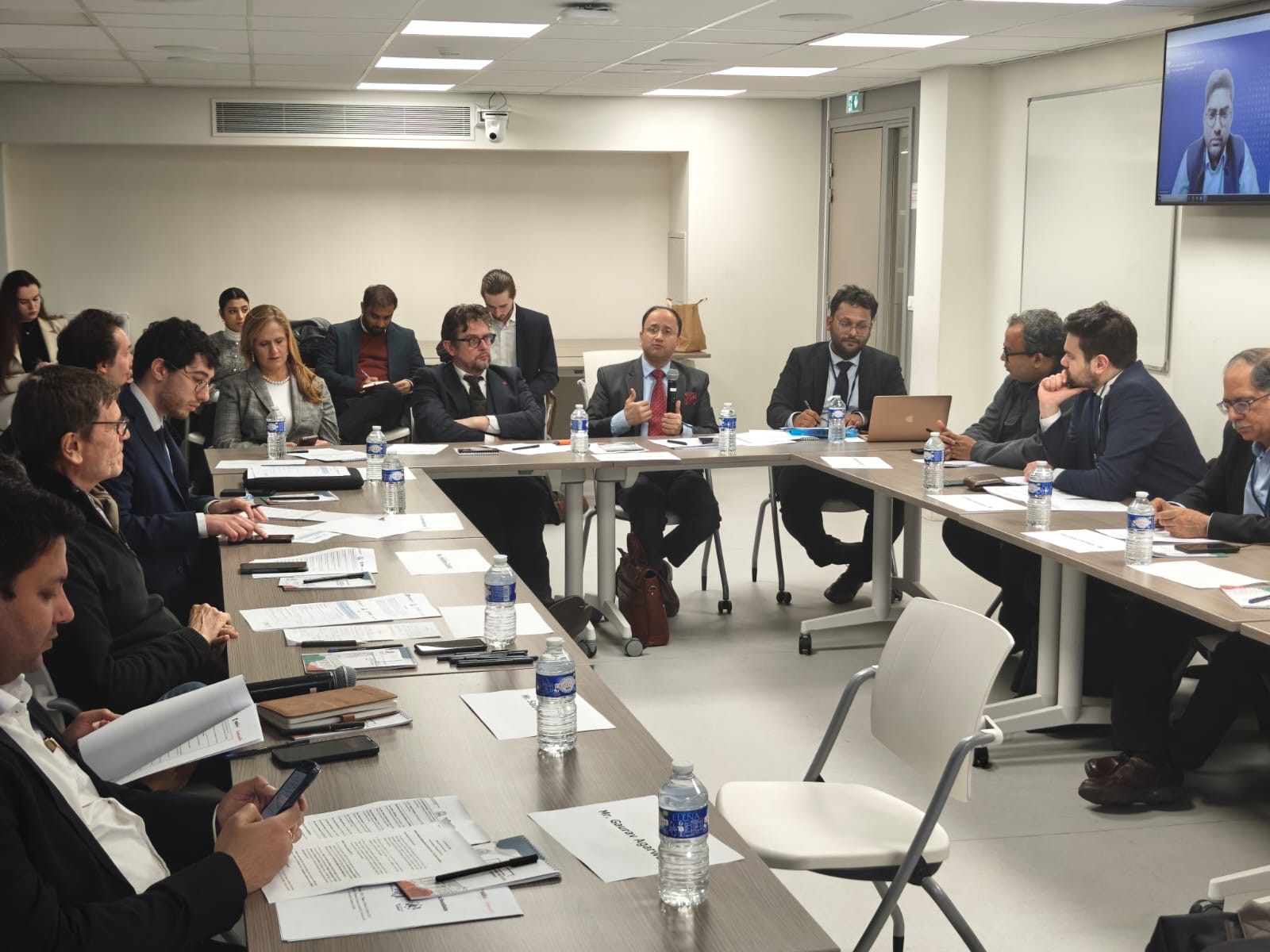
(Second) India-France AI Policy Roundtable
10 Feb 2025 | Paris, France
The 2nd India-France AI Policy Roundtable will be a Track 1.5 dialogue held as an official side event to the AI Action Summit in Paris. It aims to build on the discussions from the 1st Roundtable held on January 25, 2025, at the Indian Institute of Science (IISc) in Bengaluru, during Technology Dialogue 2025.
The inaugural closed-door roundtable titled India-France AI Policy Roundtable: Roadmap for the AI Action Summit 2025 focused on deliberating on key policy positions regarding global AI development and explored opportunities for synergy between India and France. The upcoming roundtable in Paris, will build upon the discussions from the 1st session.
The 2nd roundtable will focus on several key objectives that emerged from the discussion during the 1st roundtable, including:
1. Inclusive AI Frameworks: Develop strategies to ensure AI benefits are accessible, particularly for low-income nations.
2. Diverse Datasets: Promote inclusive datasets that represent diverse demographics for advanced AI-driven solutions.
3. Infrastructure and Skills: Address gaps in compute infrastructure, data availability, and AI-related skills development.
4. Foundational Models: Leverage foundational AI models for delivering last-mile social and economic benefits
5. Governance and Innovation: Strengthen India-France collaboration on global AI governance aligned with societal values.
6. Public-Private Partnerships: Foster collaborations to develop proof-of-concept AI use cases through private sector engagement.
7. Sustainability and Health: Explore AI solutions for cleaner energy and advancements in the health sector.
8. Academic and Data Collaboration: Encourage short-term researcher exchanges and secure data-sharing mechanisms.
9. Ethical and Responsible AI: Adopt a multidisciplinary approach to address ethical AI deployment and challenges like deepfakes.
10. Sector-Specific and Long-Term Goals: Define short- and medium-term goals (2-5 years) and identify transformative research areas, including offshore data centers and AI in natural sciences.
Flow of Event
Opening Remarks:
Prof. Ajay K. Sood, Principal Scientific Adviser to the Government of India.
Chair opening Remarks:
Shri Amit A. Shukla, Joint Secretary, Cyber Diplomacy Division, Ministry of External Affairs of the Government of India
H.E. Mr. Henri Verdier, Ambassador for Digital Affairs, French Ministry for Europe and Foreign Affairs
Discussion and Interventions on Outlined Objectives:
-
- Smt. Kavita Bhatia, Scientist 'G' & Group Coordinator, AI & Emerging Technology and Bhashini, Ministry of Electronics and Information Technology (MeitY) of the Government of India
- Mr. Clément Bacchi, International Digital Policy Lead, Directorate General of Enterprises, Ministry of the Economy and Finance
- Dr. Preeti Banzal, Adviser/Scientist G, Office of the Principal Scientific Adviser to the Government of India
- Ms. Hélène Costa, Project Director, French ministry for the ecological transition
- Shri. Abhishek Aggarwal, Scientist ‘D’, AI & Emerging Technologies Group, MeitY, Government of India
- Mr. Sharad Sharma, Co-Founder, iSPIRT Foundation
- Mr. Francis Rousseaux, International Technical Expert on AI, iSPIRT Foundation
- Dr. Sarayu Natarajan, Founder, Aapti Institute
- Mr. Charbel-Raphaël Segerie, Executive Director, Centre pour la Sécurité de l'IA
- Mr. Saurabh Singh, Head Digital and AI Policy, AWS India & South Asia
- Mr. Alexandre Mariani, International Affairs Manager, Sciences Po Paris
- Mr. Kapil Vaswani, Principal Researcher, Microsoft Research
- Mr. Sunu Engineer, Entrepreneur, Co-Founder, Transforming.Legal
- Mr. Vivek Raghavan, Co-Founder, Sarvam AI
Also attending the event were:
-
- Dr. Mariagrazia Squicciarini, Chief of Executive Office, Social and Human Sciences Sector at UNESCO
- Mr. Aakrit Vaish, Advisor to IndiaAI Mission


