Whitepaper
Advancing Indigenous Foundation Models
March 2026
Loading...

Artificial Intelligence (AI) offers transformative opportunities to complement human intelligence and enhance how we live and work. With its vast and growing range of applications, AI and machine learning are now deeply embedded in nearly every facet of modern technology.
In October 2018, AI was also identified as one of the missions in the PM-STIAC meeting. In 2018, the Government of India launched the National Strategy for Artificial Intelligence, focusing on sector-specific applications and laying the foundation for AI-led transformation.
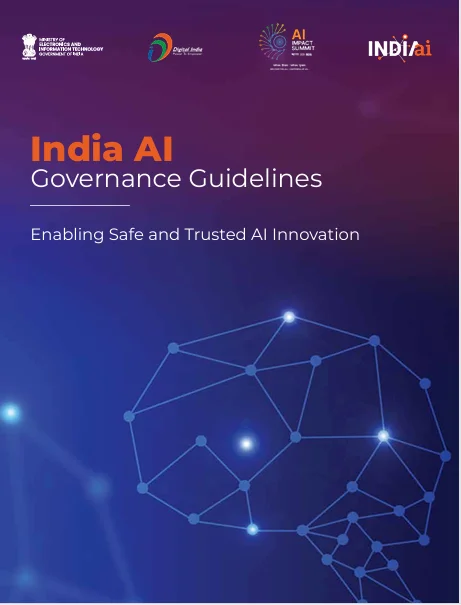
India's AI governance framework, detailed in its November 2025 guidelines, promotes innovation with a "light-touch," risk-based approach, balancing technological growth with safety, accountability, and inclusion through voluntary measures, digital public infrastructure (DPI), and a techno-legal strategy. Key elements include an AI Governance Group (AIGG) for coordination, an AI Safety Institute (AISI) for testing, principles like transparency and fairness, and mechanisms for risk classification, incident reporting, and public engagement, all aligned with India's digital ecosystem and national priorities like Viksit Bharat.
The Cabinet approved the India AI Mission on 7th March 2024. The mission aims to harness AI's transformative potential across sectors and democratise access to computational resources, improve data quality, foster indigenous AI capabilities, attract top talent, support startups through risk capital, encourage industry collaboration, promote socially impactful AI projects, and ensure ethical AI development and use.
To foster informed deliberation and action among stakeholders engaged in shaping India’s artificial intelligence (AI) policy and governance landscape, the Office of the Principal Scientific Adviser to the Government of India is producing this White Paper Series. These papers are conceived as explanatory briefs that examine specific policy issues and their associated nuances, with the aim of enabling broader understanding and meaningful societal engagement.
The White Papers are developed by drawing on collective insights from the extended AI ecosystem, including inputs from multi-stakeholder consultations, bilateral and multilateral AI policy engagements, and subsequent expert reviews. They are intended solely as explanatory documents that highlight identified policy priorities and stimulate further discussion. The views presented in these White Papers should not be construed as formal policy positions of the Office.