


Anusandhan National Research Foundation
OVERVIEW
The Anusandhan National Research Foundation (ANRF) was established under the ANRF Act, 2023 as India's apex institution for providing strategic direction to research, innovation and entrepreneurship. ANRF supersedes the Science and Engineering Research Board (SERB), established under the SERB Act, 2008, expanding its mandate to support research across a broader spectrum of disciplines and strengthen India's national research ecosystem.
Aligned with the vision of the National Education Policy (NEP) 2020, ANRF promotes a vibrant culture of research and innovation across universities, colleges, research institutions and R&D laboratories. The Foundation brings together academia, industry, government departments and research organisations to foster collaboration, accelerate scientific discovery and drive innovation-led growth.
ANRF's primary focus is to strengthen foundational and early-stage research, particularly Technology Readiness Levels (TRL) 1–4. This will support scientific discovery, proof of concept and technology validation that form the foundation for future translational research and innovation.
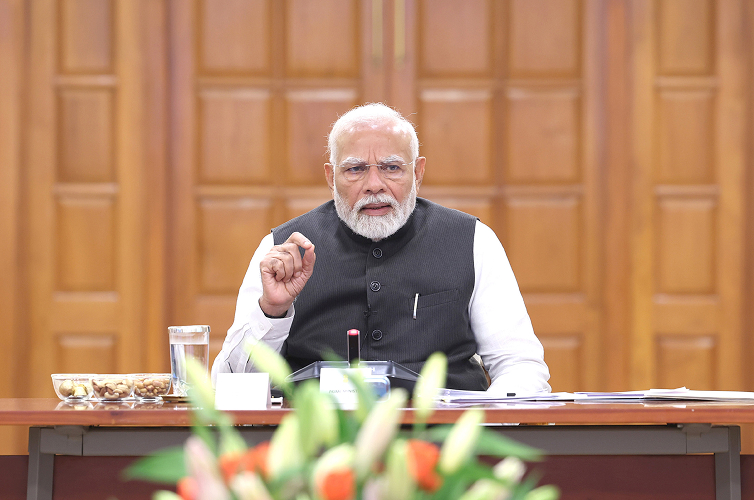
Jai Anusandhan' as a step further to Jai Jawan, Jai Kisan & Jai Vigyan can be India's true strength in connecting its science, technology and innovation with its people.
- Honorable PM Shri Narendra Modi
VISION
To position India as a global leader in research, innovation and technology. To do this by nurturing a collaborative and inclusive research ecosystem that contributes to national development and addresses global challenges.

GOVERNMENT BODIES

The ANRF Governing Board, chaired by the Hon’ble Prime Minister of India, provides strategic direction and oversight to the Foundation. The Board brings together senior representatives from government and eminent experts from science, technology, academia and industry to guide India's research and innovation priorities.
MEMBERS
- Prime Minister of India - President, ANRF Governing Board
- Union Minister of Education - Vice-President, ANRF Governing Board
- Member (Science), NITI Aayog — Member (ex-officio)
- Secretary, Department of Science & Technology — Member (ex-officio)
- Secretary, Department of Biotechnology — Member (ex-officio)
- Secretary, Department of Scientific and Industrial Research — Member (ex-officio)
- Secretary, Department of Higher Education — Member (ex-officio)
- Principal Scientific Adviser to the Government of India — Member-Secretary (ex-officio)
- Prof. Manjul Bhargava — Princeton University, USA; Member
- Dr. Romesh T. Wadhwani — Symphony Technology Group, USA; Member
- Prof. Subra Suresh — Brown University, USA; Member
- Dr. Raghuvendra Tanwar — Indian Council of Historical Research; Member
- Prof. Jayaram N. Chengalur — Tata Institute of Fundamental Research; Member
- Prof. G. Rangarajan — Indian Institute of Science; Member
Key Objectives
ANRF is committed to advancing India's scientific and innovation ecosystem through the following strategic objectives:
Develop short-, medium- and long-term roadmaps for research and development
Strengthen research capacity across academic and research institutions, with a special focus on universities and colleges where research ecosystems are still emerging
Build and strengthen research infrastructure that enables high-quality scientific inquiry, particularly in areas of national priority, emerging technologies and strategic importance
Facilitate the translation of research outcomes into impactful and technology-driven solutions
Promote nationally coordinated programmes that address societal, developmental, economic and technological challenges through scientific research
Conduct annual assessments of scientific research outcomes in India and develop a centralised repository to support data-driven policy formulation and strategic decision-making
ANRF Programs
Mission for Advancement in High-impact Areas (MAHA) – Water
The MAHA Water Program, implemented by ANRF in collaboration with the Ministry of Jal Shakti, supports mission-driven, multidisciplinary research to address India's critical water challenges. The programme promotes the development of innovative, technology-led solutions for sustainable water management, while fostering collaboration, capacity building and intellectual property creation.


