Zero Emission Trucking: Identifying Key Corridors Across India
May 2025
Loading...

The Electric Vehicle (EV) Mission was approved in the 1st Meeting of the PM-STIAC held on 9th October, 2018. This mission is critical for India to reduce fossil fuel consumption and mitigate emissions by facilitating the production of Electric Vehicles (EVs) economically.
The ‘Electric Vehicles mission of the PM-STIAC aims to develop vehicle sub-systems and components specific to Indian requirements. It is to assist the speedy adoption of electric vehicles by making their use viable. The PSA’s office has facilitated multi stake-holder consultations, formed Consultative Group on Future Technology (CGFT) and have driven standardisation work.
The final report on CGFT has been concluded in September 16, 2021.
In India current automobile market is dominated by fossil fuel-based vehicles, the Indian government has set up ambitious targets and created National missions and programs to ensure that electric vehicles replace fossil fuel-based vehicles as the primary mode of transport. The National Electric Mobility Plan (NEMMP) 2020, envisioned to achieve 6-7 million sales of hybrid and electric vehicles year on year from 2020 onwards. The FAME-II and Advanced Chemistry Cell PLI Schemes provide incentives to the customers for purchasing electric vehicles, and incentives to the manufacturers for manufacturing electric vehicles, batteries, and storage systems. The Green Hydrogen Mission will provide impetus on fuel cells manufacturing for advancing use of green hydrogen in decarbonisation of transport sector as well.
Expanding upon these foundational initiatives, the Government has introduced the PM-Electric Drive Vehicle Incentive and Ecosystem (PM-E-DRIVE) scheme, launched on 29 September, 2024. The scheme is aimed specifically at catalysing the adoption of electric vehicles, incuding segments with high impact potential such as e-buses and e-trucks. PM-E-DRIVE is designed to address remaining barriers by offering targeted incentives, strengthening domestic manufacturing capabilities, and promoting localized innovation across the electric mobility value chain.
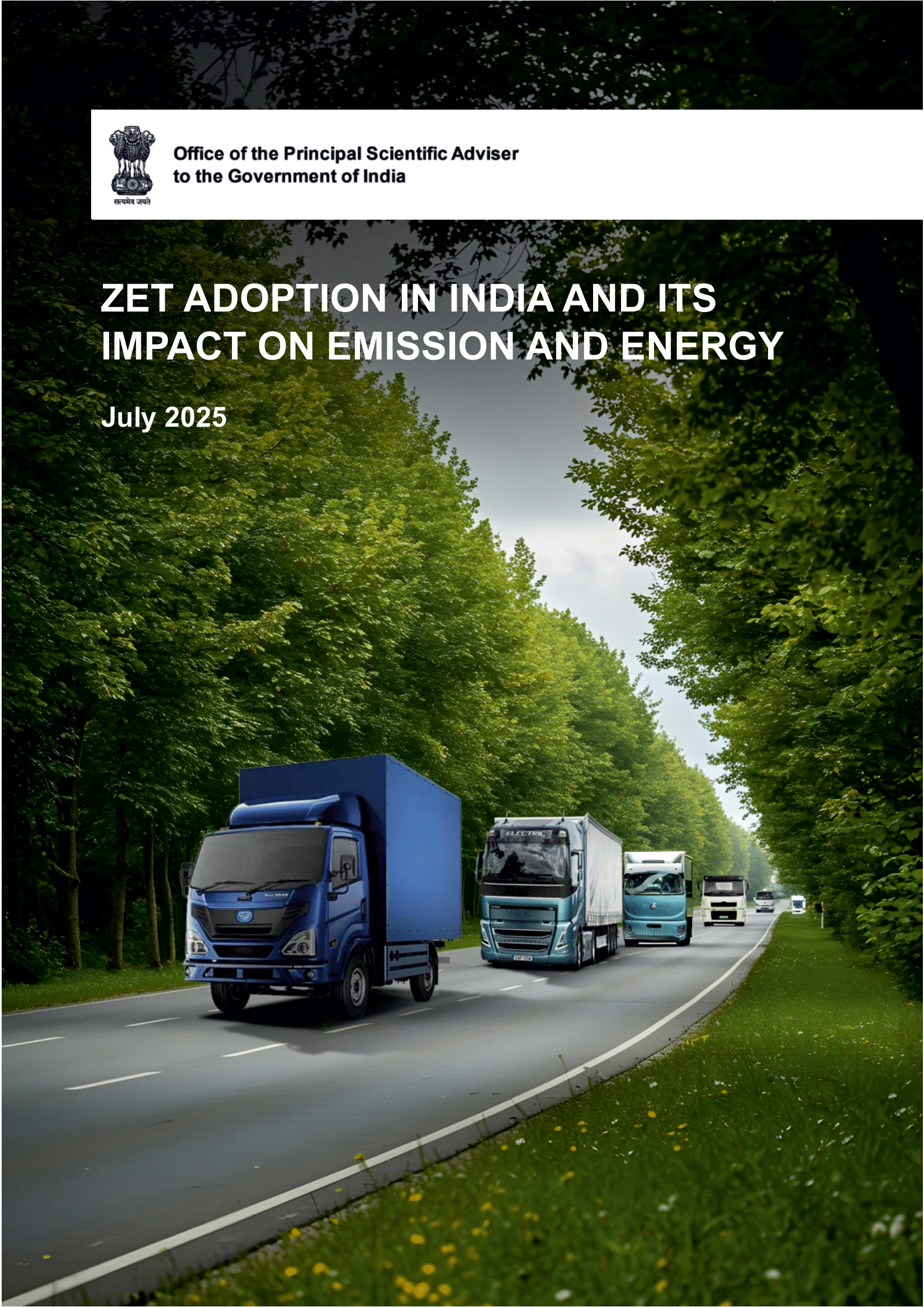
The Government of India has set an ambitious target of 30% EV penetration by 2030. Additionally, our vision of Viksit Bharat by 2047 necessitates the creation of a robust R&D landscape that can enable the creation of a self-reliant domestic EV ecosystem. Therefore, PSA Office has formed a Core Group on e-Mobility (CGeM), a panel of experts from Government, Academia, and industries, initially on August 12, 2022 under the chairmanship of Prof. Ajay K. Sood, PSA to the GoI. CGeM, has prepared several Technical Roadmap (TRM), outlines the imperative and methodologies for developing ZET pilots, advancing product innovations, conducting field research, and identifying regulatory frameworks essential for ZET integration such as:
1. TRM versions V1 and V2, focusing on exploratory research and ZET deployment.
2. R&D roadmap on surface transportation and e-mobility, and
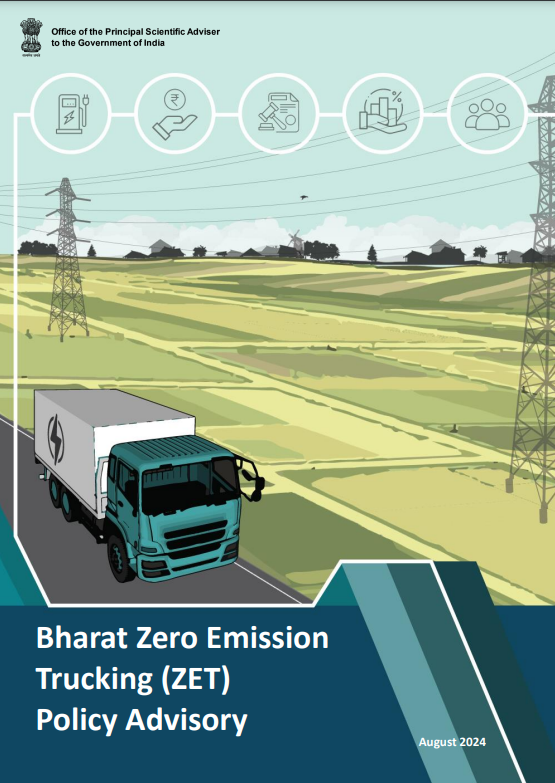
3. Bharat Zero Emission Trucking Policy Advisory
Further, a comparative study of ZET technologies along the Delhi – Jaipur Corridor, with RMI as knowledge partner has also been undertaken. The study underscores the associated costs and operational dynamics of various ZET technologies, which will be helpful in technology selection for creating requisite infrastructure for scaled ZET adoption in India.
The CGeM has now been reconstituted on 23rd April 2025 to initiate action to be undertaken in alignment with PM-E-DRIVE scheme. The updated list of members is provided here.
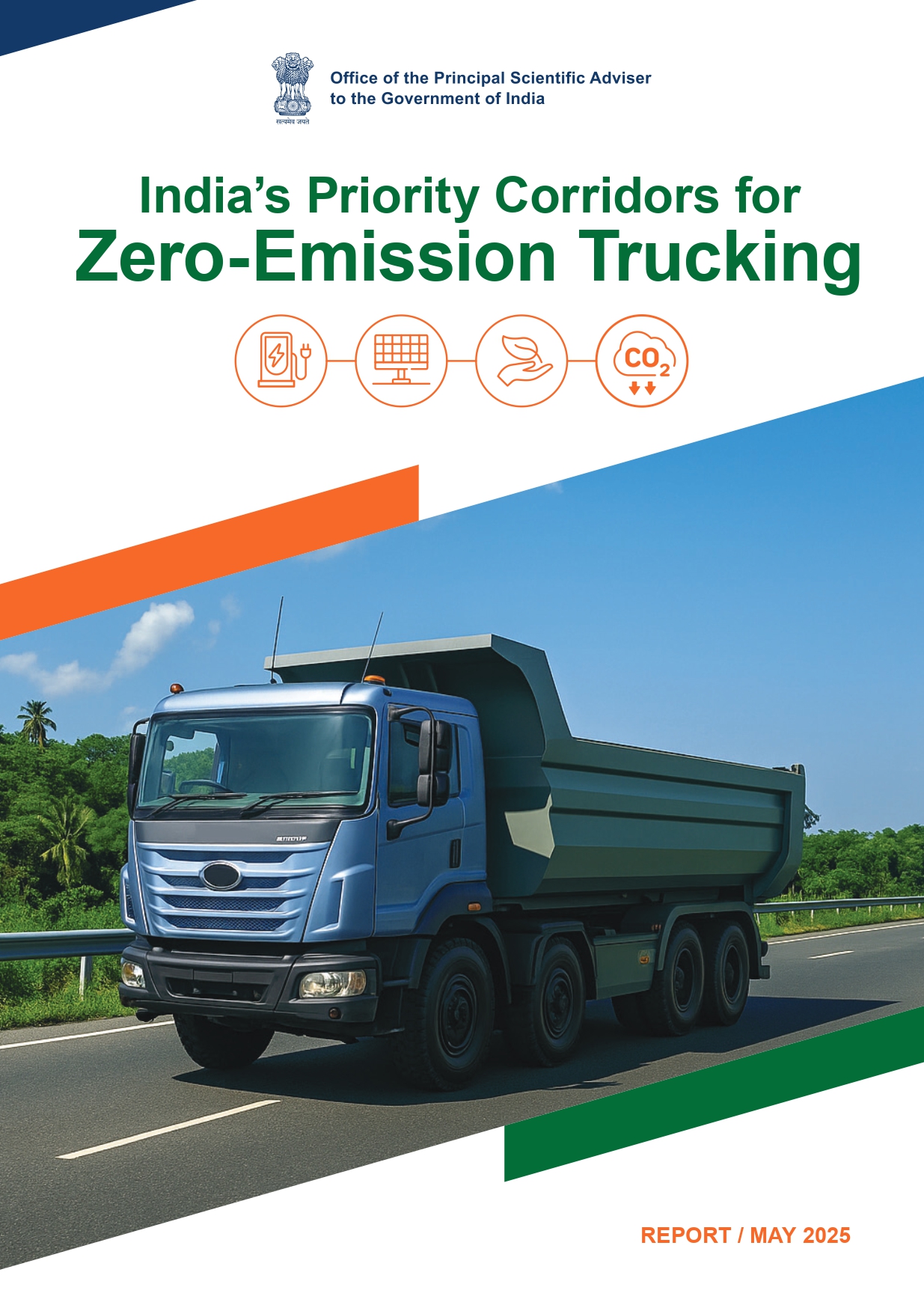
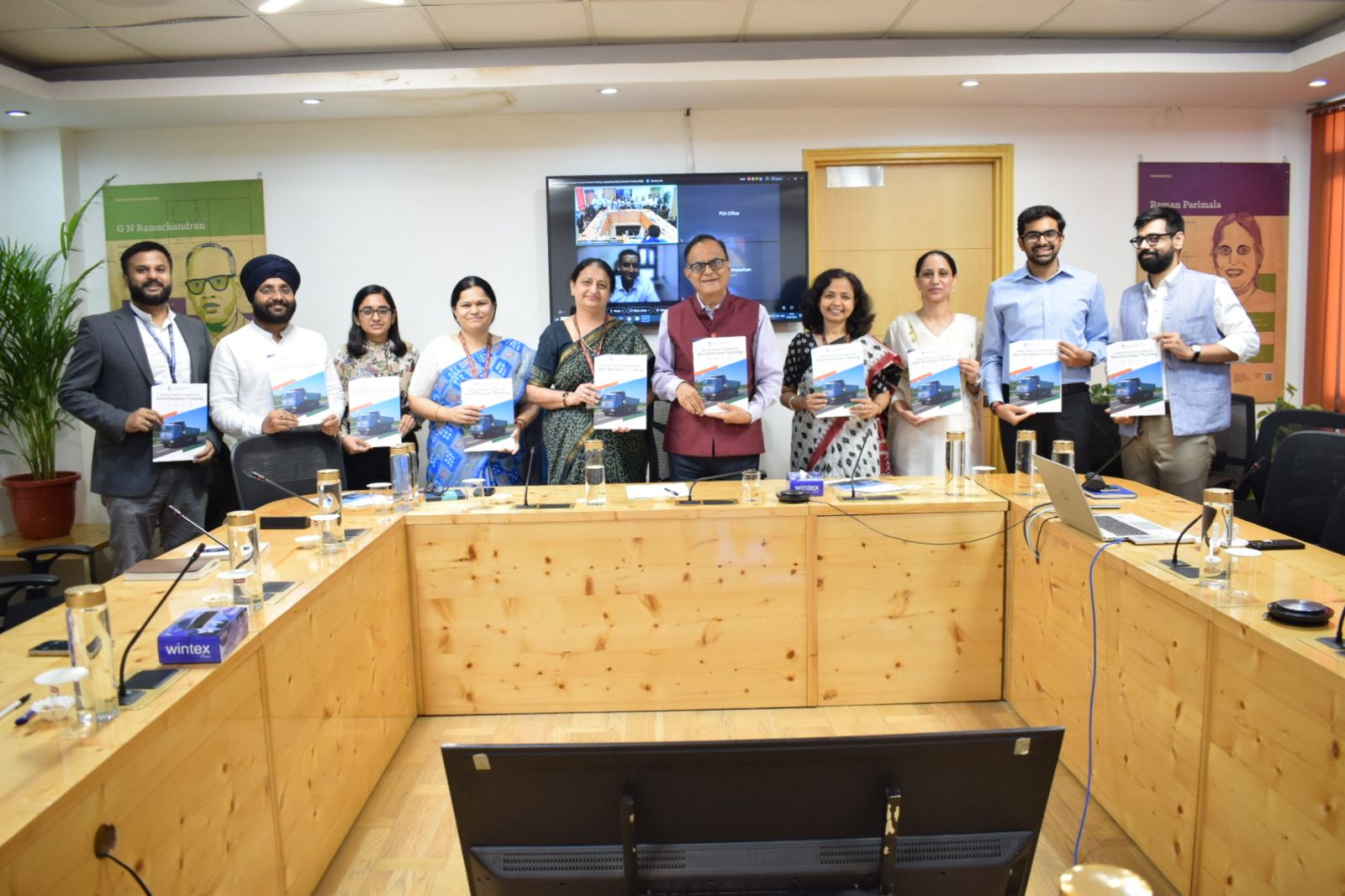
Further, as mentioned in technical roadmap for ZET, an extensive assessment of over 100+ short-haul freight corridors across India was conducted to evaluate their potential for e-truck deployment. Based on technical, commercial, and operational parameters, the top 10 priority corridors were identified, and a comprehensive report detailing their readiness and suitability was released on 9th May 2025 to support stakeholders in accelerating the transition to zero-emission freight transport at scale.
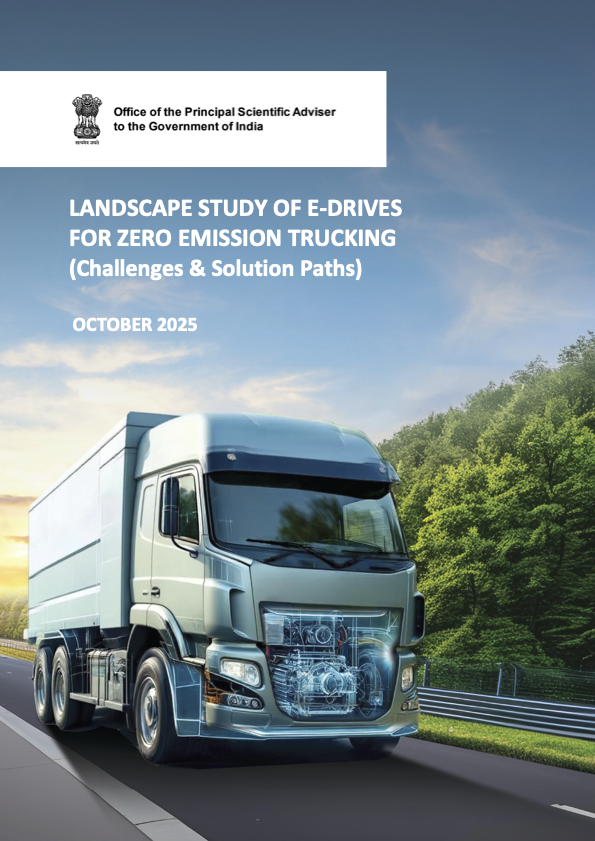
A report on "Landscape Study of e-Drives for Zero Emission Trucking (Challenges & Solution Paths)" to guide stakeholders, OEMs, financiers, operators, and government bodies on ecosystem preparation has been released on October, 2025.
These initiatives are further complemented by recent Government schemes such as the Scheme to Promote Manufacturing of Sintered Rare Earth Permanent Magnets (REPM Scheme). The scheme aims to strengthen domestic manufacturing of Rare Earth Permanent Magnets, which are critical for EV and advanced automotive applications, thereby enhancing self-reliance and supporting India’s position in the global EV supply chain.