Artificial Intelligence (AI) offers transformative opportunities to complement human intelligence and enhance how we live and work. With its vast and growing range of applications, AI and machine learning are now deeply embedded in nearly every facet of modern technology.
In 2018, the Government of India launched the National Strategy for Artificial Intelligence, focusing on sector- specific applications and laying the foundation for AI-led transformation. In October 2018, AI was also identified as one of the missions in the PM-STIAC meeting.
BHASHINI helps people access digital services in their own language. It uses AI to break language barriers.As of May 2025, BHASHINI supports 35+ languages with over 1,600 AI models and 18 language services. It is integrated into widely used platforms such as IRCTC, NPCI’s IVRS systems, and police documentation, making essential services more inclusive and accessible for all. With over 8.5 lakh mobile app downloads, BHASHINI continues to empower citizens to engage with digital platforms in the language of their choice.

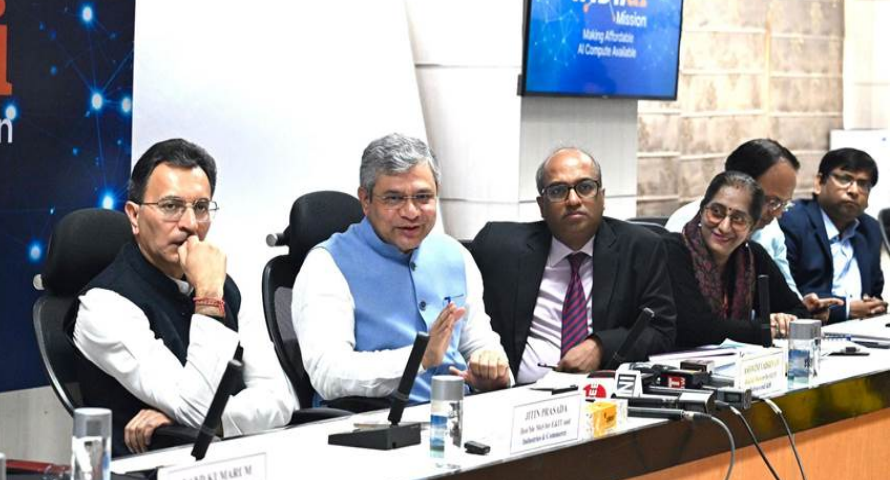
The Cabinet approved the IndiaAI Mission on 7th March 2024. The mission aims to harness AI's transformative potential across sectors and democratise access to computational resources, improve data quality, foster indigenous AI capabilities, attract top talent, support startups through risk capital, encourage industry collaboration, promote socially impactful AI projects, and ensure ethical AI development and use.
IndiaAI's frequent collaborators include Govt of India and NASSCOM entities, State governments of Telangana and Tamil Nadu; private companies such as IBM, Microsoft, NVIDIA, Meta, Fractal, and Tech Mahindra; academic institutes such as IIT Madras, IIT Jodhpur, and IIT Ropar; and startups such as CoRover, Niramai, Haptik, Oncostem, Yellow AI, TagHive, and many more.
Additionally, IndiaAI in collaboration with Meta has announced the establishment of the Center for Generative AI, Srijan (सृजन) at IIT Jodhpur, along with the launch of the “YuvAi Initiative for Skilling and Capacity Building” in collaboration with the All India Council for Technical Education (AICTE), for the advancement of open source artificial intelligence (AI) in India. The partnership will enable development of indigenous AI applications, advance skill development in AI, boost research capabilities with the aim of contributing to India’s AI mission of ensuring tech sovereignty and the vision of building AI solutions that are tailor-made for India. Through education, capacity building, and policy advisory, the Government of India will be empowering the next generation of researchers, students, and practitioners with the knowledge and tools necessary for the responsible development and deployment of GenAI technologies.
Establishing a robust AI infrastructure with over 10,000 GPUs through public-private partnerships to provide AI services and resources.
Focusing on the development and deployment of indigenous Large Multimodal Models and domain-specific foundational models.
Streamlining access to high-quality non-personal datasets to spur AI innovation.
Promoting the development and scaling of impactful AI solutions for socio-economic transformation.
Expanding AI education across academic levels and setting up Data and AI Labs in Tier 2 and 3 cities to nurture talent.
Accelerating deep-tech AI startups by facilitating access to funding for innovative projects.
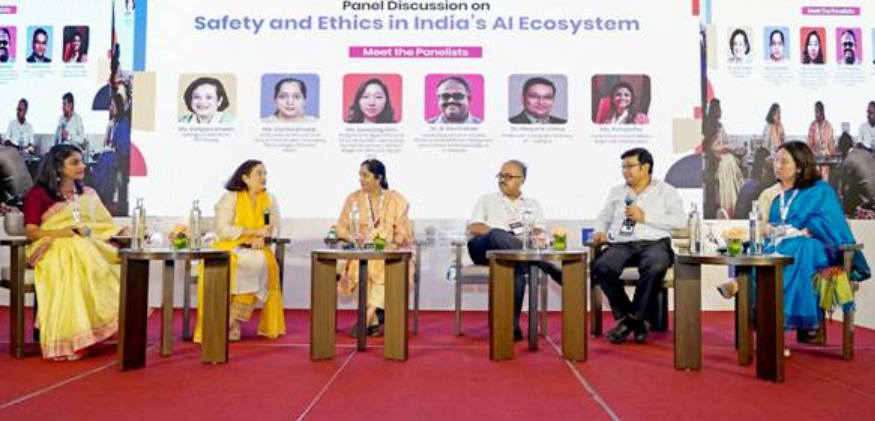
Ensuring responsible AI development and deployment through indigenous tools, frameworks, and governance structures.
Recognising the importance of data in AI development, the Modi government has launched the IndiaAI Dataset Platform to provide seamless access to high-quality, non-personal datasets. This platform will house the largest collection of anonymised data, empowering Indian startups and researchers to develop advanced AI applications. By ensuring diverse and abundant datasets, this initiative will drive AI-driven solutions across key sectors, enhancing innovation and accuracy.
The government is facilitating the development of India's own foundational models, including Large Language Models (LLMs) and problem-specific AI solutions tailored to Indian needs. To foster AI research, multiple Centres of Excellence have also been set up.
India’s Digital Public Infrastructure (DPI) has redefined digital innovation by combining public funding with private sector-led innovation. Platforms like Aadhaar, UPI, and DigiLocker serve as the foundation, while private entities build application-specific solutions on top of them. This model is now being enhanced with AI, integrating intelligent solutions into financial and governance platforms. The global appeal of India’s DPI was evident at the G20 Summit, where several countries expressed interest in adopting similar frameworks. Japan’s patent grant to India’s UPI payment system further underscores its scalability.
For Mahakumbh 2025, AI-driven DPI solutions played a crucial role in managing the world’s largest human gathering. AI-powered tools monitored real-time railway passenger movement to optimise crowd dispersal in Prayagraj. The Bhashini-powered Kumbh Sah’AI’yak Chatbot enabled voice-based lost-and-found services, real-time translation, and multilingual assistance. Its integration with Indian Railways and UP Police streamlined communication, ensuring swift issue resolution. By leveraging AI with DPI, Mahakumbh 2025 set a global benchmark for tech-enabled, inclusive, and efficient event management.
India's workforce is at the heart of its digital revolution. The country is adding one Global Capability Center (GCC) every week, reinforcing its status as a preferred destination for global R&D and technological development. However, sustaining this growth will require continuous investment in education and skill development. The government is addressing this challenge by revamping university curricula to include AI, 5G, and semiconductor design, aligning with the National Education Policy (NEP) 2020. This ensures that graduates acquire job-ready skills, reducing the transition time between education and employment.
India's Generative AI (GenAI) ecosystem has seen remarkable growth, even amid a global downturn. The country's AI landscape is evolving from experimental use cases to scalable, production-ready solutions, reflecting its growing maturity.
Key milestones in India's AI journey from 2023 to 2025
Ministry of Skill Development & Entrepreneurship launches "AI for India 2.0" to promote AI education and skill development.
India, the Chair of the Global Partnership on Artificial Intelligence (GPAI), successfully hosted the GPAI Summit at the Bharat Mandapam in New Delhi.
Over Rs 10,300 Cr approved to empower AI startups and expand compute infrastructure access.
Held in New Delhi, the summit showcased India's leadership in global AI development.
PM Modi co-chairs the AI Action Summit with the President of France, attended by global leaders and experts.
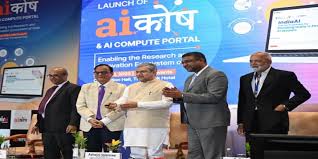
MeitY launches AIKosha, a secured platform for AI datasets, models, and use cases.
India's national compute capacity milestone, with new startups selected for building India's Foundation Model.
UNESCO & MeitY host the 5th Stakeholder Consultation on AI Readiness Assessment Methodology in India.